China’s low-voltage electrical equipment sector has developed a broad and competitive manufacturing base. This article introduces China’s top 10 Low Tension Current Transformer manufacturers. It focuses on their engineering capabilities, product range, testing practices, and export experience.
A suitable current transformer must deliver more than a low purchase price. Its ratio accuracy, insulation strength, thermal performance, and mechanical fit affect every measurement. Dr. John Horak, a recognized transformer and grounding specialist, emphasizes, “Good protection begins with dependable measurement.” This principle matters inside a compact switchboard, where a loose terminal or incorrect burden rating can distort readings. Small details become expensive problems.
The manufacturers reviewed here serve industrial panels, energy meters, protection systems, renewable-energy projects, and commercial buildings. Some offer split-core designs for retrofit work. Others produce molded-resin units for demanding indoor installations. Their differences often appear in certificates, test reports, delivery consistency, customization support, and communication quality.
Buyers should compare rated primary current, secondary output, accuracy class, burden, insulation level, and installation method. Factory inspection also deserves attention. A polished catalog cannot replace traceable testing. That is where many evaluations become less comfortable.
This ranking is not absolute. Supplier performance can change with project size, region, raw-material costs, and production schedules. Some information may require direct confirmation from each factory. Still, the comparison provides a practical starting point for engineers, distributors, and procurement teams seeking a dependable Low Tension Current Transformer supplier in China. The best choice may not be the largest manufacturer. It may be the one that understands the panel, the load, and the consequences of one inaccurate signal.
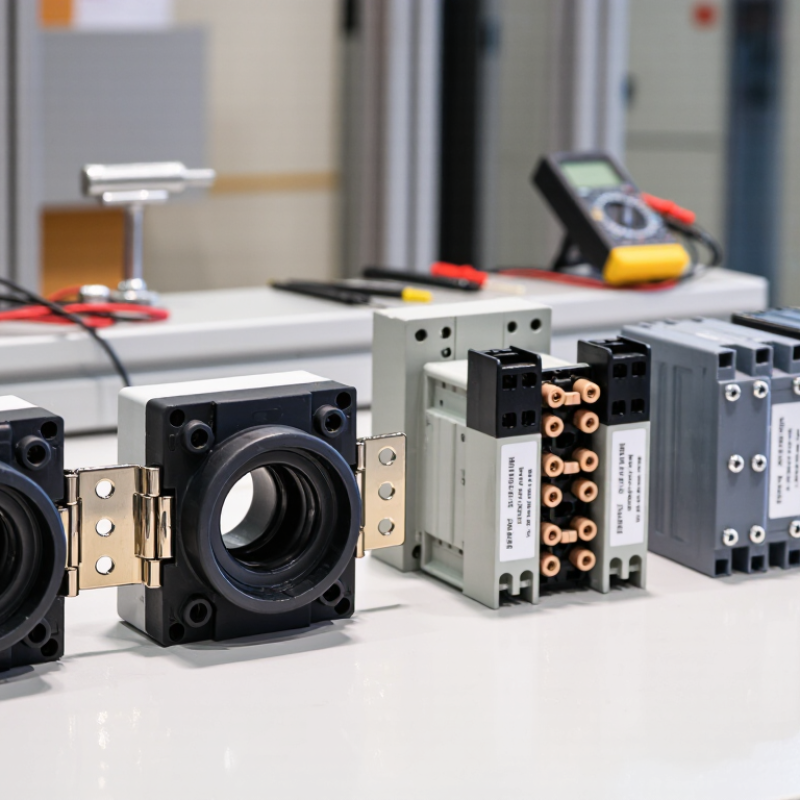
Definition and Role of Low-Tension Current Transformers
Low-tension current transformers measure high current in low-voltage electrical systems. They convert primary current into a smaller, standardized secondary current. This output supports meters, monitoring devices, and protective relays. The transformer also separates measuring instruments from the main circuit. That separation improves operator safety during routine inspections and fault analysis.
A typical unit surrounds or connects to a conductor carrying current. Its core and winding produce a proportional secondary signal. Engineers select the transformation ratio according to the expected load, not only the present reading. Accuracy class, rated burden, insulation level, and frequency also matter. A poorly matched burden can increase errors and weaken protection performance. Polarity deserves attention too. Reversed connections may produce confusing readings.
Installation quality often decides whether specifications become real performance. Loose terminals, damaged insulation, or an incorrectly closed core can distort measurements. Never leave a current transformer secondary open while primary current flows. Dangerous voltage may develop across the secondary terminals. Field testing should compare readings under light and heavy loads. The results may expose saturation, wiring mistakes, or an unsuitable ratio. Selection is not always clean. Existing panels can limit space, access, and conductor size. That limitation sometimes forces a compromise, which should be recorded and reviewed before commissioning.
Technical reference table for low-tension current transformers. Values identified as typical may vary according to the applicable standard, construction, rated current, installation method, and project specification.
| No. | Technical Dimension | Verified Technical Data | Definition and Practical Role |
|---|---|---|---|
| 1 | Low-voltage classification | Low-voltage AC systems are commonly defined as systems not exceeding 1,000 V AC. | Establishes the normal application range for low-tension current transformers used in distribution boards, switchboards, meters, and monitoring equipment. |
| 2 | Measurement principle | A CT uses electromagnetic induction to reproduce a reduced secondary current proportional to the primary current. | Provides galvanic isolation and allows standard meters, protection relays, and energy monitors to measure high primary currents safely. |
| 3 | Common secondary output | The most widely used rated secondary currents are 1 A and 5 A. | A 1 A secondary can reduce cable losses over longer wiring distances, while a 5 A secondary is common in conventional panel and relay circuits. |
| 4 | Typical transformation ratios | Examples include 100/5 A, 200/5 A, 400/5 A, 600/5 A, and 1,000/5 A; the selected ratio should match the expected primary load. | The ratio determines the relationship between primary and secondary current and directly affects meter scaling and measurement accuracy. |
| 5 | Accuracy class | Common metering classes include 0.2, 0.5, and 1, subject to the applicable product standard and operating range. | A lower accuracy-class number generally indicates tighter error limits for measurement applications, provided the CT operates within its specified burden and current range. |
| 6 | Rated burden | Typical rated burdens include 5 VA, 10 VA, and 15 VA, although other values are available for specific circuits. | Burden is the apparent power load connected to the secondary circuit. The total burden includes instrument inputs, terminals, and cable impedance. |
| 7 | Construction formats | Common designs are solid-core, split-core, and bar-type current transformers. | Solid-core units are suited to new installations; split-core units support retrofit work without disconnecting the primary conductor; bar-type units use an integrated primary conductor. |
| 8 | Core and insulation requirements | Magnetic cores are commonly manufactured from electrical steel or other magnetic materials, with insulation rated for the intended system voltage and environment. | The core affects accuracy and saturation behavior, while insulation and creepage distances support electrical safety and reliable service. |
| 9 | Standards and compliance | IEC 61869-2 specifies additional requirements for inductive current transformers; local standards may also apply. | Standards define requirements such as ratio error, phase displacement, insulation, temperature rise, markings, and routine or type testing. |
| 10 | Secondary-circuit safety | A current-transformer secondary must not be left open while the primary is energized; shorting links or approved test terminals are used during maintenance. | An open secondary can generate dangerously high voltage and may damage insulation or equipment. Correct grounding, short-circuit facilities, polarity marking, and safe isolation procedures are essential. |
Reference note: Always confirm the applicable edition of IEC 61869-2, national electrical regulations, rated insulation level, frequency, ambient conditions, accuracy requirements, and installation clearances before selecting a current transformer.
Check rated voltage, primary current, burden, accuracy class, and installation space. The window must fit the busbar. Do not force it.
Class 0.5 or 0.5S may suit energy metering. Class 1 can support basic monitoring. Confirm actual performance through test records.
Request temperature-rise data, insulation test results, short-time thermal current results, and calibration records. Three consecutive batch reports are better than one perfect sample.
Check the ratio at low current and under realistic loads. Review core material, terminal markings, sealing, and response curves. Small errors matter.
Inspect winding, resin curing, calibration, and final inspection areas. Check process records and product traceability. Brochures are not enough.
Split-core models suit retrofit work and limited installation space. Solid-core models often provide steadier performance in fixed panels. The application decides.
They are critical in continuous operation and industrial environments. Confirm insulation suitability for the intended voltage. Ask for temperature-rise evidence.
Not always. I once focused too much on price. Later ratio inconsistencies created replacement work and extra checking. Cheap can become expensive.
They offer useful direction, but rankings may use incomplete production or export data. Verify samples, testing, delivery history, and technical response time.
Cable alignment can affect readings. Loose terminals can weaken the installation. Follow the installation guide and inspect connections before commissioning.
This article provides a practical overview of the Low Tension Current Transformer, explaining its role in measuring and monitoring electrical current safely within low-voltage power systems. It describes how these transformers support energy management, equipment protection, fault detection, and reliable power distribution across industrial, commercial, and infrastructure applications. Readers will also learn which factors matter when selecting Chinese manufacturers, including technical capability, manufacturing experience, customization services, delivery capacity, after-sales support, and compliance with recognized industry requirements.
The article presents a neutral comparison of ten leading categories of manufacturers without focusing on brand promotion. It examines product design, measurement accuracy, insulation performance, safety features, installation methods, and suitable application environments. In addition, it discusses quality-control procedures, testing processes, certification expectations, and purchasing considerations such as specifications, communication requirements, total cost, and long-term reliability. This overview is intended to help buyers and engineering teams evaluate suppliers systematically and choose products that match their electrical systems and operational needs.