

1. Technical Fundamentals & Electromagnetic Architecture of Bar Type Current Transformers
In modern electrical distribution networks, medium-voltage (MV) switchgear assemblies, and low-tension (LT) main distribution boards, the accurate stepping down of primary electrical currents for metering and protective relaying is paramount. A Bar Type Current Transformer (commonly designated as a Bar-Primary CT) is a specialized toroidal instrument transformer where the primary winding consists of a fully integrated, solid copper or aluminum busbar permanently fixed through the central magnetic core aperture.
Unlike ring-type (window-type) current transformers—which rely on the customer installing their own insulated cable or switchboard busbar through an empty central void—the integrated bar structure of a Bar Type CT is manufactured, insulated, and calibrated as a single monolithic assembly. This structural difference yields profound performance advantages in high-fault electrical environments.
Information Gain Insight: Dynamic Stress Isolation
During heavy short-circuit events, electromagnetic forces ($F_{pk}$) acting on switchboard conductors can exceed tens of kilonewtons. In conventional window CTs, busbar deflection can induce direct mechanical strain onto the secondary winding frame. Torotrans' Bar Type Current Transformers incorporate resin-cast or reinforced tape insulation barriers that decouple mechanical busbar shear stress from the underlying toroidal core magnetic circuit, preventing core permeability degradation and ratio phase errors under fault conditions.
Electromagnetic Design & Core Topology
The heart of Torotrans’ Bar Type Current Transformer lies in its continuous, jointless core wound from high-permeability, Cold-Rolled Grain-Oriented (CRGO) silicon steel or specialized Nickel-Iron (Mu-metal) alloys. Magnetic flux leakage is inherently minimized due to the symmetrical distribution of the secondary winding around the continuous toroidal magnetic circuit.
The physical relationship governing the secondary induced electromotive force ($E_s$) in a bar-primary transformer is expressed by Faraday's Law of Electromagnetic Induction adapted for toroidal geometries:
$$E_s = 4.44 \cdot f \cdot N_s \cdot B_{max} \cdot A_c$$
Where:
- $f$ = Operating frequency (50 Hz / 60 Hz)
- $N_s$ = Number of secondary turns ($N_s = N_p \times \text{CT Ratio}$, where $N_p = 1$ turn for a bar-primary)
- $B_{max}$ = Maximum flux density in Tesla (engineered below saturation limits to avoid harmonics)
- $A_c$ = Net magnetic core cross-sectional area in $\text{m}^2$
Because the primary turn count ($N_p$) is strictly equal to $1$, achieving high accuracy at low primary current ratings (e.g., 50/5A or 100/5A) requires a significantly larger magnetic core cross-section ($A_c$) and premium high-permeability core materials compared to multi-turn primary transformers. Torotrans leverages advanced automated toroidal winding machinery at our 3,500 sq.ft Pune facility to achieve precise turn distribution, ensuring strict compliance with IEC 61869-2 accuracy classes.
2. Deep Engineering Comparison: Bar Type CT vs. Window & Wound Type CTs
Selecting the correct transformer architecture for electrical panels requires balancing mechanical strength, space constraints, thermal dissipation, and budget. The table below highlights key performance matrices to assist procurement managers and electrical design leads in specifying the ideal instrument transformer.
| Performance Parameter | Bar Type CT (Torotrans) | Window / Ring Type CT | Wound Primary Type CT |
|---|---|---|---|
| Primary Conductor | Factory integrated solid copper bar (Tin/Silver plated) | User-supplied insulated cable or copper busbar | Multi-turn internal copper winding |
| Short-Time Thermal Current ($I_{th}$) | Extremely High (Up to 40kA - 63kA / 1s) | Dependent on external busbar sizing | Moderate to Low (Internal windings vulnerable to thermal stress) |
| Dynamic Current Rating ($I_{dyn}$) | Up to $2.5 \times I_{th}$ (Superior mechanical bracing) | N/A (Relies on panel structure) | Limited by internal bobbin shear strength |
| Accuracy Class Capabilities | 0.2S, 0.2, 0.5, 0.5S, 5P10, 10P20, PS/PX Class | 0.5, 1.0, 3.0 (At lower primary currents) | 0.2, 0.5 (Ideal for very low primary currents < 50A) |
| Insulation Systems | Vacuum Epoxy Resin Cast or Heavy Tape Wrapped | Plastic Casing / Tape Insulated | Resin Encapsulated / Porcelain |
| Installation Efficiency | Plug-and-play busbar drop-in (Saves panel wiring time) | Requires threading heavy cables/bars on-site | Complex terminal busbar connections |
Mathematical Derivation of Short-Circuit Mechanical Stress Resistance
During short-circuit conditions, peak dynamic currents ($I_{dyn}$) induce intense electrodynamic forces between adjacent phase conductors. The peak electromagnetic force per unit length ($F_{pk}$) acting on the internal busbar of a Bar Type Current Transformer is calculated using the Biot-Savart force equilibrium:
$$F_{pk} = \frac{\mu_0}{2\pi} \cdot \frac{I_{dyn1} \cdot I_{dyn2}}{d}$$
Where $\mu_0 = 4\pi \times 10^{-7} \, \text{H/m}$ (magnetic permeability of free space) and $d$ represents the center-to-center spacing between phase bars. Torotrans' resin-encapsulated Bar Type CTs mold the copper bar directly into high-tensile epoxy matrix compounds, absorbing these immense radial and axial stress vectors without risking dielectric insulation puncture or magnetic core displacement.
3. Torotrans Flagship Bar Type Current Transformer Product Range
Backed by over 30 years of manufacturing experience, Torotrans provides custom-engineered and standardized Bar Type Current Transformers optimized for low-voltage and medium-voltage applications across global industrial markets.
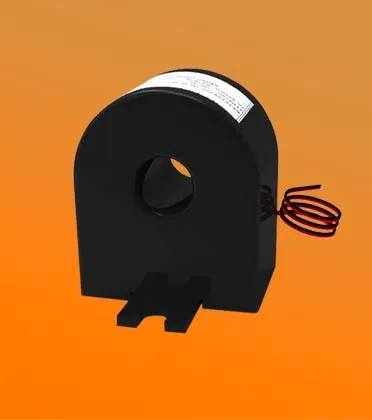
TORO-BOX-30X35-BP Series
Designed for compact power distribution boards and motor control centers (MCC). Features an integrated 30x5mm or 30x10mm tinned copper bar encased in flame-retardant poly-carbonate / resin housing.
- Primary Current: 100A to 600A
- Secondary Output: 1A or 5A
- Accuracy Class: 0.5, 0.2S (Revenue Grade)
- Burden: 2.5VA to 10VA
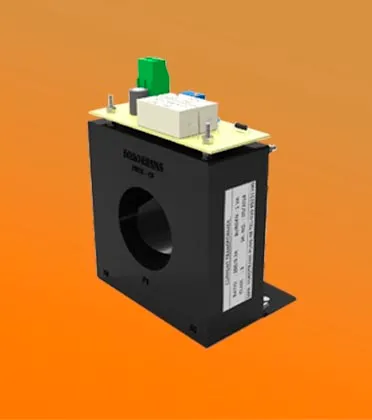
TORO-BOX-75X75P Heavy Protection Series
Engineered specifically for feeder protection applications in switchgears. Offers high ALF (Accuracy Limit Factor) ratings of 5P10 and 10P20 to ensure un-saturated signal transmission during severe earth faults.
- Primary Current: 400A to 2500A
- Secondary Output: 1A or 5A
- Protection Class: 5P10, 10P20, PS Class
- Short Circuit Rating: 40kA for 1 sec
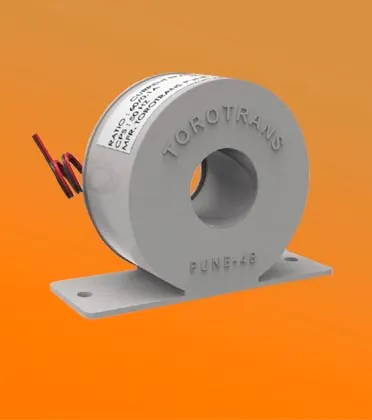
TORO-OMEGA-55 Vacuum Resin Cast Series
Full vacuum-impregnated resin cast Bar Type CT built for harsh industrial environments prone to high humidity, chemical exposure, and elevated ambient temperatures.
- Primary Current: 200A to 1200A
- Insulation Voltage: 0.72kV / 3kV HV Withstand
- Frequency: 50 Hz / 60 Hz
- Custom Copper Bar Extensions Available
4. 2025–2030 Global Sourcing Trends & Technological Evolution in Bar Type CTs
The global instrument transformer market is undergoing rapid transformation driven by smart grid digitisation, renewable energy integration, and stringent carbon footprint regulations. Global procurement managers sourcing Bar Type Current Transformers must evaluate several emerging trends:
Trend 1: Migration to Class 0.2S for Low-Load Smart Grid Metering
Traditional metering transformers compliant with standard Class 0.5 or 0.2 often suffer from expanded ratio error at partial loads (below 20% rated current). In modern commercial solar installations and data center PDU panels where loads fluctuate dynamically, Class 0.2S (governed by IEC 61869-2) guarantees strict error margins down to 1% of nominal current. Torotrans incorporates annealed nanocrystalline core ribbons to achieve linear permeability across ultra-wide dynamic ranges.
Trend 2: Eco-Friendly Polyurethane & Cycloaliphatic Epoxy Formulations
Environmental regulations such as EU-REACH and RoHS 3 have forced a global transition away from legacy phthalate-plasticized potting resins. Future-proof procurement mandates self-extinguishing, halogen-free, and high-thermal-conductivity resin formulations. Torotrans utilizes premium resin compounds that meet UL 94-V0 flammability standards while offering superior thermal conductivity ($\lambda \ge 0.8 \, \text{W/m}\cdot\text{K}$) for rapid heat dissipation.
Trend 3: High-Harmonic Distortion Resilience (THD Mitigation)
With the proliferation of non-linear loads—such as variable frequency drives (VFDs), EV fast-charging stations, and grid-tied solar inverters—current waveforms contain significant high-frequency harmonics (3rd, 5th, 7th, 11th orders). Standard CT cores suffer from eddy current core losses ($P_e \propto f^2 \cdot B^2$) that lead to thermal overheating. Torotrans optimizes core lamination thickness (down to 0.23mm CRGO) to suppress high-frequency eddy losses.
Trend 4: Supply Chain Resilience via Indian Manufacturing Ecosystems
Global EPC contractors and switchgear manufacturers are increasingly adopting "China+1" diversification strategies. Pune, India has established itself as an international hub for precision transformer manufacturing. Torotrans offers global buyers a robust supply chain solution combining competitive total cost of ownership (TCO), ISO 9001:2015 quality oversight, and short sea-freight lead times to Europe, North America, and the Middle East.
Need Custom Bar Dimensions or Technical Datasheets?
Our engineering team can customize primary copper busbar plating, mounting bracket geometry, and secondary terminal positions to match your exact switchboard cutout dimensions.
Send an Inquiry5. Torotrans Manufacturing Authority & Quality Control Protocols
Established in 1994 in Pune, Maharashtra, Torotrans has built a 30+ year global reputation as a specialist manufacturer of Toroidal Power Transformers (15VA to 5KVA) and Low Tension Current Transformers. Operating out of a dedicated 3,500 sq.ft production facility equipped with high-precision automatic toroidal winding machines and advanced vacuum resin-casting chambers, Torotrans ensures rigorous quality assurance across every production unit.
Why Global OEMs Trust Torotrans Bar Type Current Transformers
Our commitment to Google E-E-A-T standards (Experience, Expertise, Authoritativeness, and Trustworthiness) is reflected in our complete vertical manufacturing control and strict laboratory testing regimes.
100% In-House Core Processing
We stress-relief anneal our toroidal cores in nitrogen-purged furnaces to restore maximum magnetic permeability after slitting and winding.
Precision Automated Winding
Computer-controlled toroidal turn counters eliminate human error, ensuring absolute phase angle displacement and ratio accuracy.
Vacuum Epoxy Encapsulation
Resin cast units undergo dual-stage vacuum degassing to eradicate micro-voids and prevent partial discharge degradation.
Full Routine Test Verification
Every single CT is tested for Ratio Error, Phase Displacement, HV Dielectric Withstand (3kV/1min), and Inter-turn Insulation before export.
Standardized Manufacturing Process Flow
- Raw Material Verification: High-purity electrolytic grade copper (99.9% Cu) busbars and prime-grade CRGO steel validation.
- Core Toroid Winding & Isothermal Annealing: Eliminating mechanical winding stresses to minimize excitation current ($I_e$).
- Secondary Winding & Insulation Layering: Wrapping with high-dielectric polyester/mylar films and automatic secondary copper winding.
- Busbar Insertion & Centering: Precision mechanical jig alignment of the solid primary bar to ensure uniform magnetic field symmetry.
- Encapsulation Options: Outer protective wrapping with synthetic insulation tape or full potting in polyurethane/epoxy resin molds.
- Metrological Calibration: Automated CT Test Bench measurement comparing transformer error against certified standard reference CTs.
6. Global Procurement FAQ: Bar Type Current Transformers
Below are technical answers to the most frequently asked procurement and engineering questions submitted by switchgear builders, panel designers, and international buyers.
- Rated Transformation Ratio: e.g., 400/5A, 800/1A, 1200/5A.
- Accuracy Class & Application: Metering (Class 0.2S, 0.2, 0.5) or Protection (Class 5P10, 10P20, PS).
- Rated Burden (VA): e.g., 2.5VA, 5VA, 10VA, 15VA.
- Short-Time Thermal Current ($I_{th}$): e.g., 25kA/1s, 40kA/1s, 50kA/3s.
- Busbar Dimensions & Material: Copper dimensions (e.g., 40x10mm, 60x10mm, 80x10mm) and surface finish (Tinned or Silver-plated).
- Insulation Type: Resin Cast (potting resin) or Tape Insulated.
Ready to Accelerate Your Switchgear Procurement?
Partner with Torotrans for high-precision, ISO-certified Bar Type Current Transformers. Benefit from direct factory engineering support, competitive B2B volume pricing, and custom prototyping delivered from our specialized facility in Pune, India.