Choosing a Tape Wound Current Transformer is not a simple catalog decision. Accuracy, insulation, window size, burden, and installation space can change protection performance. A small mismatch may create serious measurement errors.
The International Energy Agency’s Electricity 2024 report expects global electricity demand to grow by about 4% annually through 2026. More connected equipment means more monitoring points. Meanwhile, the U.S. Department of Energy’s 2024 transformer supply-chain assessment highlights extended lead times and sourcing pressure. These conditions make careful specification more valuable than rushed purchasing.
Dr. J. Lewis Blackburn, a respected protection-engineering author, wrote, “The current transformer is an essential component of any protective relaying system.” That principle still matters when comparing a Tape Wound Current Transformer for switchgear, metering, or industrial distribution. The right choice should begin with seven practical checks: primary current, accuracy class, burden, insulation level, core design, physical fit, and certification. IEC 61869-2 provides an important reference for current-transformer performance requirements. Do not rely on appearance alone. A neat copper winding can still hide an unsuitable ratio or saturation risk. The temptation to choose the lowest price is real. It can also be expensive later.
This guide will connect technical ratings with field realities, including tight cabinet clearances, warm busbars, vibration, and difficult cable routing. Some recommendations may need adjustment for your installation. That is normal. A reliable purchase comes from checking the datasheet against actual system conditions, then confirming uncertainties with the manufacturer before approval.
7 Tips for Buying a Tape Wound Current Transformer
Understand the Structure and Operating Principle
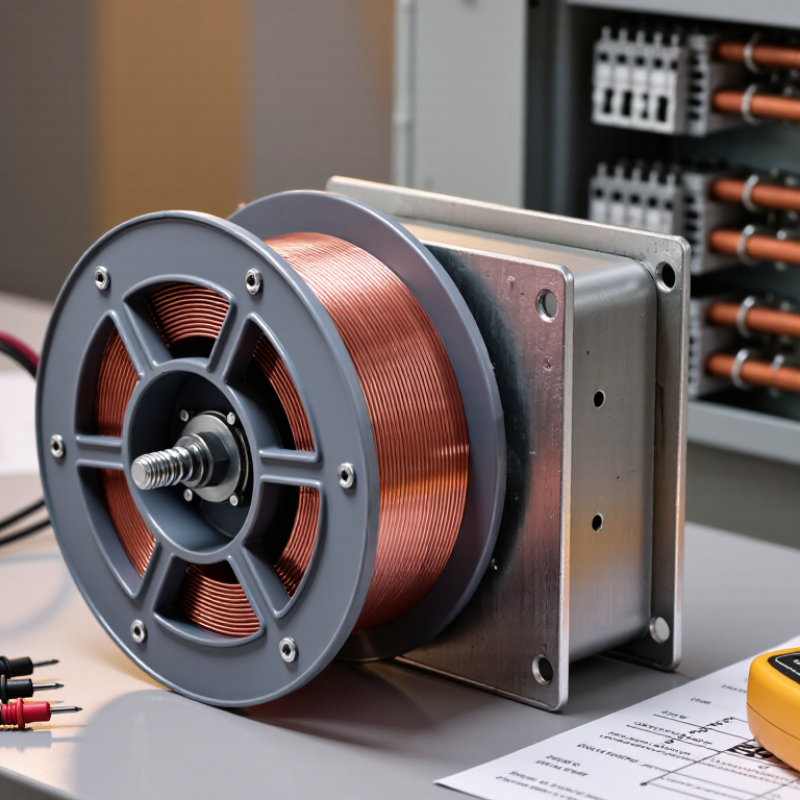
A tape-wound current transformer uses a laminated magnetic core, insulated copper windings, and protective tape layers. Its primary conductor usually passes through the core window. The secondary winding carries a smaller current for meters, relays, or monitoring equipment. The operating principle is simple: alternating primary current creates magnetic flux, which induces proportional secondary current. The ratio depends on primary turns, secondary turns, and core design. In practice, small air gaps or damaged insulation can increase error.
Check the required ratio, accuracy class, burden, frequency, and window size before ordering. IEC 61869-2 defines important requirements for current-transformer performance, insulation, and testing. IEEE C57.13 also provides recognized accuracy and burden classifications. Do not select a unit only by its rated current. A 600/5 A transformer may perform poorly if connected to excessive cable burden. Confirm the total burden in VA, including meters, relays, and lead resistance. Keep the secondary circuit closed during operation. An open secondary can create dangerous voltage.
Global demand also matters. The IEA’s Electricity 2024 report expects electricity demand to grow by about 3.4% annually through 2026, increasing measurement needs in distribution networks. Field inspections often reveal loose terminals, undersized windows, or incorrect polarity markings. These mistakes are avoidable. Yet datasheets can still be unclear, especially for saturation and short-time ratings. Ask for test records, excitation curves, thermal ratings, and installation drawings. A practical buying decision should match the transformer to the actual system, not an idealized specification.
| Tip | What to Check | Typical Technical Reference | Why It Matters | Recommended Buying Action |
|---|---|---|---|---|
| 1 | Confirm the current ratio and primary current. | Common secondary ratings are 1 A or 5 A. Typical primary ratings may range from approximately 5 A to 3,000 A, depending on the design. | A current transformer reduces a high primary current to a standardized secondary current. The approximate relationship is: Ip / Is = Ns / Np. | Select a ratio that places the normal operating current near the CT rated current without routinely exceeding its thermal or accuracy limits. Specify the primary current, secondary current, and required ratio on the purchase document. |
| 2 | Understand the tape-wound structure. | A tape-wound CT normally uses a toroidal magnetic core made from continuously wound, thin electrical-steel strip. An insulated secondary winding is distributed around the core, while the power conductor passing through the window acts as the primary turn. | The continuous wound core provides a closed magnetic path and can offer good magnetic uniformity. The primary may have one or more effective turns when a cable or busbar passes through the core multiple times. | Verify the core type, insulation system, window dimensions, mounting arrangement, terminal construction, and enclosure or encapsulation method. Do not assume that every toroidal CT has the same mechanical or electrical performance. |
| 3 | Check the window size and installation clearance. | The required window must accommodate the cable, busbar, or insulated conductor. The available opening, outside diameter, height, width, and mounting-hole dimensions are all application-specific. | A conductor that does not pass through the window cannot be installed safely. Insufficient clearance can also increase mechanical stress, insulation damage, and installation difficulty. | Measure the conductor outside dimensions and required bending or routing space before ordering. Include the number of conductors, possible parallel cables, and the intended mounting orientation. |
| 4 | Match accuracy class and burden to the application. | Metering CTs commonly use accuracy classes such as 0.1, 0.2, 0.5, 1.0, or 3.0. Rated burdens are commonly specified in volt-amperes, for example 5 VA, 10 VA, or 15 VA, but the exact value depends on the design. | Accuracy depends on secondary current, connected lead resistance, meter or relay burden, frequency, and magnetic core performance. Excessive burden causes additional ratio and phase errors. | Add the burden of all connected devices and the secondary leads. Choose the required accuracy class and rated burden together, and request test data at the specified burden when measurement accuracy is critical. |
| 5 | Determine whether the CT is for metering, protection, or both. | Protection CTs may be specified with designations such as 5P10 or 10P20, where the number indicates the composite error limit and the final number is the accuracy-limit factor under defined conditions. | Metering CTs are optimized for accuracy near normal load and may saturate during high fault current. Protection CTs are designed to reproduce current more reliably during fault conditions. | State the function clearly: energy measurement, indication, overcurrent protection, differential protection, or a combined application. For protection systems, specify the required class, burden, fault current, and accuracy-limit factor. |
| 6 | Verify electrical, environmental, and insulation ratings. | Confirm system frequency, insulation level, dielectric withstand, continuous thermal current, short-time thermal current, operating temperature, humidity, altitude, and enclosure requirements. Power-frequency systems commonly operate at 50 Hz or 60 Hz. | The CT must withstand the system voltage environment and the thermal and mechanical effects of normal and fault current. Temperature and moisture can affect insulation life and measurement stability. | Compare the datasheet with the actual installation conditions. Request compliance with the applicable regional or project standard and confirm the required test certificates before purchase. |
| 7 | Plan safe secondary wiring and commissioning. | A CT secondary should be connected to an appropriate burden or short-circuited through an approved test or shorting terminal when the primary is energized. Terminal polarity is commonly marked P1/P2 and S1/S2. | An open-circuited CT secondary can develop dangerously high voltage, damage insulation, and create a serious shock hazard. Incorrect polarity can cause erroneous readings or protection malfunction. | Specify accessible shorting terminals, clear polarity markings, suitable secondary cable sizes, and a documented test procedure. Never open-circuit an energized CT secondary, and follow qualified electrical-safety procedures during installation. |
It uses a laminated magnetic core, insulated copper windings, and protective tape layers. The primary conductor passes through the core window. The secondary produces a smaller proportional current for meters or monitoring equipment.
Alternating primary current creates magnetic flux inside the core. This flux induces current in the secondary winding. The ratio depends on winding turns and core design. Small air gaps can increase errors.
Confirm the current ratio, accuracy class, burden, frequency, insulation level, and window size. Check normal load and possible fault current. Do not select by rated current alone. That shortcut can fail.
Burden includes meters, relays, and lead resistance. Excessive burden can increase measurement error and heating. For example, a 600/5 A unit may perform poorly with long cables. Calculate the total burden in VA.
Measure the conductor diameter before ordering. Leave room for insulation, terminals, and safe bending. A narrow opening may damage the winding. A split-core design helps retrofit work, but only when the core closes fully.
Keep the secondary circuit closed while the transformer operates. An open secondary can create dangerous voltage. Check polarity markings and terminal tightness. Small wiring mistakes can become serious.
Request accuracy data, burden ratings, insulation details, frequency range, and routine-test records. Protection applications may require saturation or knee-point information. Ask for installation drawings and excitation curves. A low price may hide testing or replacement costs.
Request compliance documents for applicable international current-transformer requirements. Confirm that certificates cover the exact model and manufacturing location. A quality-management certificate does not prove product performance. Read its scope carefully.
Compare calibration, traceability, warranty terms, spare availability, and response times. Ask whether the same winding design can be reproduced later. Include dimensional checks in a pilot order. Keep one spare for critical panels. I would verify the ratio twice.
Buying a Tape Wound Current Transformer requires more than comparing prices. Start by understanding its construction and operating principle, including how the wound magnetic core measures current and transfers a proportional signal to monitoring or protection equipment. Clearly define the required primary and secondary ratings, frequency range, accuracy class, and burden so the transformer can perform reliably under normal and peak operating conditions. The selected model should also match the application, conductor size, available space, mounting method, and environmental conditions such as heat, moisture, vibration, or limited access.
Insulation quality, electrical safety features, mechanical durability, and manufacturing consistency are equally important. Review test procedures, technical documentation, and relevant certifications before making a decision. When comparing suppliers, consider total value rather than initial cost alone, including product quality, customization capability, delivery reliability, warranty terms, technical assistance, and long-term support. A careful evaluation of these factors helps ensure dependable measurement, safer installation, and stable performance throughout the transformer’s service life.