Modern power systems demand measurement that remains accurate under heat, vibration, moisture, and fault stress. The IEA’s Electricity 2024 report forecasts strong global electricity demand growth through 2026, driven by industry, cooling, data centers, and electrification. More circuits mean more dependable current sensing. In this environment, the Resin Cast Special Current Transformer supports protection, metering, and control applications where compact insulation and stable performance matter.
This guide examines ten leading models through practical engineering criteria. These include accuracy class, rated burden, insulation level, short-time thermal current, and partial-discharge performance. IEC 61869-2 provides the key international framework for current-transformer requirements. IEEE C57.13 remains an important reference for North American projects. Market research from MarketsandMarkets also connects current-transformer demand with grid modernization, renewable integration, and industrial automation. The trend is clear. Selection is not.
Field experience shows that a transformer may perform well in a laboratory yet disappoint inside a crowded switchgear cabinet. Cable clearance, ambient temperature, grounding practice, and secondary wiring can change the result. A strong datasheet helps, but it cannot replace application review. No ranking fits every installation. That is worth remembering.
Our comparison focuses on manufacturers with traceable specifications, recognized testing practices, and realistic application support. We consider protection relays, revenue metering, medium-voltage distribution, and renewable-energy equipment. Some products may appear similar, but their saturation behavior and thermal margins can differ sharply. Readers should verify certificates, test reports, and local compliance before purchase. The “best” choice is often the one that quietly maintains accuracy when the system becomes uncomfortable.
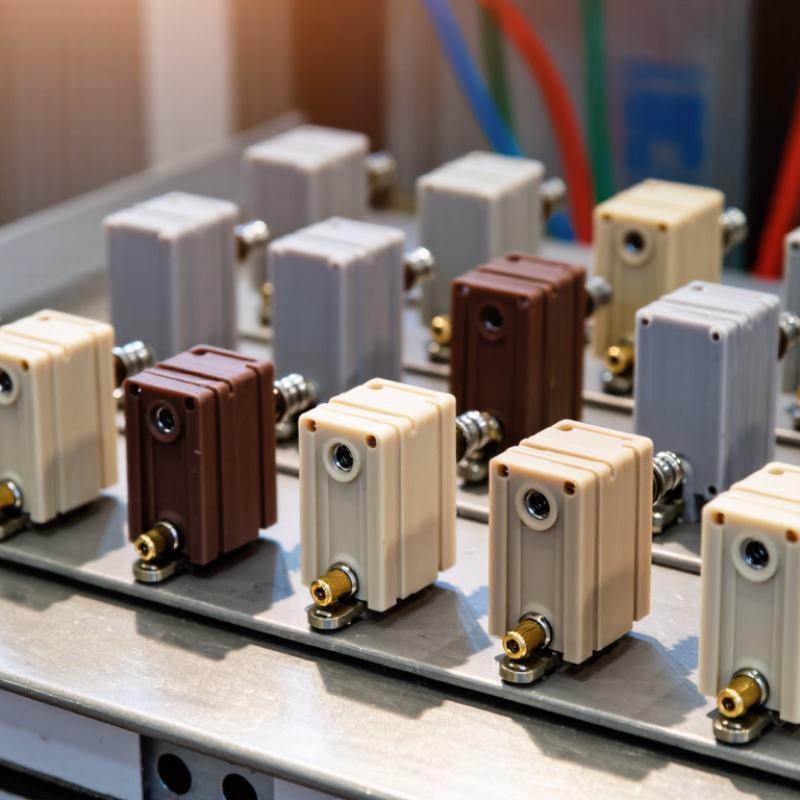
Resin cast special current transformers are measurement and protection devices built for demanding electrical systems. They reduce high primary currents to safer, standardized secondary values. Unlike oil-filled designs, their windings are sealed inside hardened epoxy resin. This structure resists moisture, dust, vibration, and many installation stresses.
The “special” design usually refers to a customized electrical or mechanical requirement. Engineers may specify unusual ratios, multiple cores, extended accuracy, high insulation levels, or compact dimensions. Protection cores must respond reliably during faults without saturating too early. Metering cores need stable accuracy during normal operation. Small errors matter. A factory technician checks winding resistance, polarity, insulation strength, and accuracy before shipment.
In practical installations, resin cast transformers fit switchgear, busbar systems, generator panels, and industrial distribution equipment. Their solid insulation simplifies mounting and reduces concerns about leakage. However, resin is not indestructible. Excessive heat, sharp mechanical impact, poor ventilation, or incorrect secondary wiring can shorten service life. Never leave a current transformer secondary open while the primary carries current; dangerous voltage may develop. This point is sometimes missed during commissioning.
Selection requires more than matching a current ratio. The engineer should review burden, frequency, short-circuit conditions, accuracy class, mounting space, and environmental temperature. Field measurements and system drawings should agree, though they do not always. A careful inspection of terminals and clearances can reveal mistakes before energization. Resin cast special current transformers are dependable when their design matches the actual network, not merely the catalogue description.
Resin cast special current transformers are epoxy-molded instrument transformers designed for measurement, protection, grounding, monitoring, or installation-specific applications. The table below compares representative configurations and typical technical characteristics rather than company-specific products.
| No. | Resin Cast CT Type | Typical Application | Typical Primary Rating | Typical Secondary | Accuracy / Protection Class | Key Characteristics | Main Advantage |
|---|---|---|---|---|---|---|---|
| 1 | Indoor Metering CT | Switchboards, control panels, and energy measurement | 5–3,000 A | 1 A or 5 A | Class 0.2, 0.2S, 0.5, or 0.5S | Epoxy insulation, window or bar-primary construction, low phase displacement | Good measurement accuracy and compact installation |
| 2 | Protection CT | Overcurrent, feeder, transformer, and differential protection | 50–4,000 A | 1 A or 5 A | 5P10, 5P20, 10P10, or PX | High knee-point options, specified burden, controlled saturation performance | Reliable relay operation during fault conditions |
| 3 | Residual-Current CT | Earth-fault and ground-leakage detection | Primary conductors routed through a common core | 1 A or 5 A | Protection class or sensitive residual-current specification | Zero-sequence core, balanced response, optional shielded construction | Detects earth faults without separate phase CT summation |
| 4 | Split-Core Resin CT | Retrofit metering where conductor disconnection is impractical | 100–1,000 A | 1 A or 5 A | Usually Class 0.5 to Class 1, depending on design | Hinged or separable core, insulated housing, defined mating surfaces | Fast installation with minimal circuit interruption |
| 5 | Dual-Core Metering and Protection CT | Installations requiring independent measurement and protection circuits | 50–3,000 A | 1 A or 5 A per core | Metering Class 0.5S plus 5P or 10P protection core | Two electrically separate secondary windings in one molded body | Saves space while serving two different functions |
| 6 | Bushing-Type Resin CT | Power transformers, generators, and enclosed switchgear bushings | 100–5,000 A | 1 A or 5 A | Metering or protection classes selected for the system | Designed around a primary bushing or insulated conductor | Efficient integration into compact high-current equipment |
| 7 | Summation CT | Combining currents from multiple feeders into one measuring circuit | Commonly 1 A or 5 A inputs per feeder | 1 A or 5 A output | Typically Class 0.5, Class 1, or application-specific | Several isolated primary or secondary inputs with one output | Simplifies monitoring of multiple circuits |
| 8 | Outdoor Epoxy CT | Outdoor switchyards and weather-protected distribution equipment | 50–2,000 A | 1 A or 5 A | Metering or protection class; insulation level varies by voltage | UV-resistant coating, creepage distance, sealed terminals, weather-resistant epoxy | Solid insulation and low maintenance in suitable outdoor environments |
| 9 | High-Voltage Resin CT | Medium-voltage switchgear and distribution substations | 100–4,000 A | 1 A or 5 A | Measurement or protection class; commonly designed for medium-voltage insulation systems | Cast-resin dielectric system, defined power-frequency and impulse withstand levels | Flame-retardant, mechanically robust, and oil-free construction |
| 10 | Multi-Ratio Resin CT | Systems with changing load levels or multiple commissioning requirements | 100–3,000 A with selectable taps | 1 A or 5 A | Class 0.5, 0.5S, 5P, or other specified class | Multiple secondary taps, sealed epoxy body, clearly marked terminals | Flexible ratio selection without replacing the complete transformer |
It measures or protects electrical systems by reducing high current to safer secondary values. Its windings are sealed in hardened epoxy resin. Solid insulation helps resist moisture, dust, and vibration.
Its design meets unusual electrical or mechanical requirements. Examples include custom ratios, multiple cores, high insulation, or compact dimensions. The catalog label alone may not explain everything.
They fit switchgear, busbar systems, generator panels, and industrial distribution equipment. Their solid construction supports secure mounting. Good ventilation still matters.
Metering cores emphasize stable accuracy during normal loads. Protection cores must respond during faults without saturating too early. They serve different duties.
Review the current ratio, burden, frequency, accuracy class, and fault conditions. Check insulation levels, temperature, mounting space, and short-time thermal current. A ratio match is not enough.
Never leave the secondary circuit open while primary current flows. A dangerous voltage may develop across the open terminals. This mistake is sometimes missed during commissioning.
Split-core types support retrofits around existing conductors. Window types fit compact switchboards. Zero-sequence types detect earth faults around grouped conductors. Dual-ratio types allow future system changes.
Excessive heat, sharp impact, poor ventilation, or wrong wiring can shorten service life. Dirt may reduce split-core accuracy when the core closes poorly. Small mistakes can create large protection concerns.
They should check ratio, polarity, burden, insulation condition, terminal tightness, and clearances. They should compare field measurements with system drawings. Drawings are not always correct.
No. Resin resists many environmental stresses, but it is not indestructible. Inspect terminals, ventilation, mounting, and wiring regularly. A perfect selection is impossible.
A Resin Cast Special Current Transformer is a protective and measuring device designed to convert high primary currents into safe, standardized secondary signals for meters, relays, and control systems. Its resin insulation provides strong mechanical support, moisture resistance, electrical stability, and reliable performance in demanding indoor or outdoor installations. This article explains how to evaluate these transformers by examining accuracy class, rated current, insulation level, thermal and short-time withstand capacity, burden, frequency range, and environmental durability.
The comparison of ten representative transformer types focuses on their strengths, suitable operating conditions, and performance requirements across power distribution, industrial control, renewable energy, and safety monitoring applications. It also outlines how to select the correct ratio and accuracy level, verify system compatibility, install the unit safely, and maintain dependable operation through inspection, connection checks, temperature monitoring, and periodic testing. These guidelines help users choose a practical, efficient, and long-lasting solution for precise current measurement and reliable protection.