Choosing the best 2026 TORO BOX 30X35 BP Current Transformer requires more than comparing prices or catalog photos. The TORO-BOX-30X35-BP Current Transformer should be assessed through measurable electrical performance, installation conditions, and long-term reliability. Its suitability depends on the required current ratio, accuracy class, frequency, insulation rating, and available panel space. A compact design may fit neatly around a busbar, yet clearance and heat must still be checked carefully.
This guide examines practical selection points for engineers, electricians, procurement teams, and maintenance professionals. It considers metering accuracy, protection performance, terminal quality, enclosure strength, and documentation from the manufacturer. Real installation experience matters. A transformer that appears excellent on paper may be difficult to mount inside a crowded cabinet. Small details, such as connector access and cable bending space, can affect commissioning time.
Safety comes first.
Current transformers must be installed and tested by qualified personnel. Their secondary circuit requires correct handling, especially during energized operation. Applicable electrical codes, manufacturer instructions, and local inspection requirements should guide every project. Product claims should also be verified through datasheets, test reports, and traceable certifications rather than marketing language alone.
There is no universal “best” model. The right choice changes with load profile, environmental temperature, system voltage, and monitoring equipment. Some specifications may remain unclear without direct supplier confirmation. That is worth acknowledging. A careful comparison should identify those gaps before purchase, installation, or replacement. This approach supports dependable measurements, safer maintenance, and better value throughout the transformer’s service life.
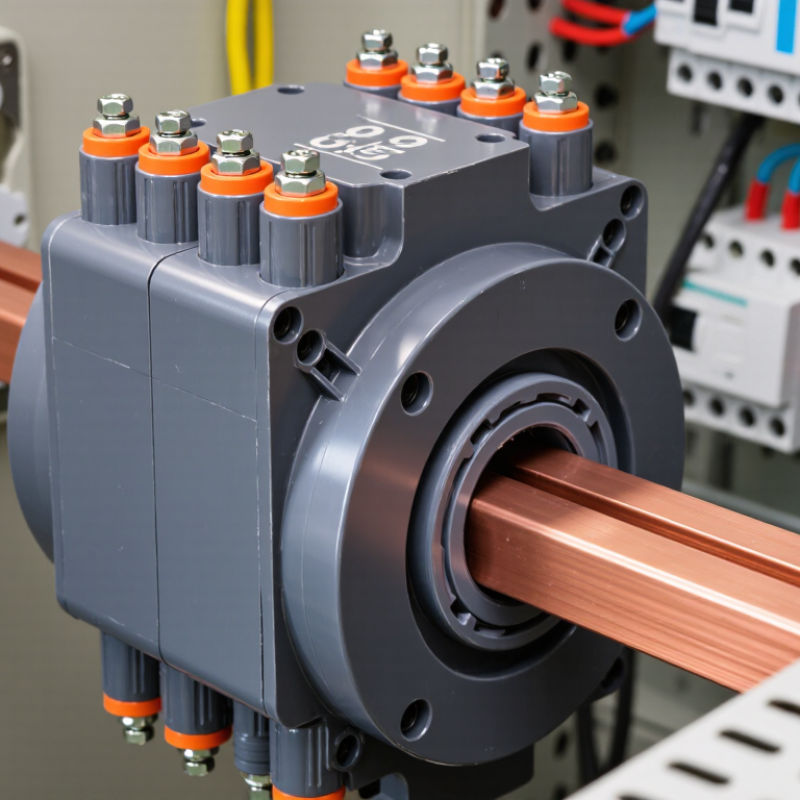
TORO BOX 30X35 BP Current Transformer: Overview and Purpose
The 30X35 BP current transformer is a compact toroidal device for measuring alternating current without interrupting the primary conductor. Its central opening allows a cable or busbar to pass through the magnetic core. The secondary winding then produces a smaller, proportional current for a meter, relay, or monitoring controller.
In practical installations, the 30X35 designation usually refers to the window dimensions, but dimensions alone do not confirm performance. Check the transformation ratio, accuracy class, rated burden, insulation level, and frequency before selection. A 400/5 A model, for example, delivers 5 A when the primary carries 400 A. The connected instrument must match that secondary rating.
Never leave a live secondary circuit open. Dangerous voltage can develop. Shorting terminals, suitable fuses, and clear identification improve maintenance safety. During commissioning, I would inspect conductor centering, polarity markings, terminal tightness, and cable routing. A small alignment error may not seem important, yet it can affect readings in sensitive systems. The transformer should also fit the conductor comfortably; forcing a thick cable through the window is poor practice. I have seen installation plans treat the 30X35 opening as exact usable space, which needs reconsideration. Heat, enclosure clearance, and nearby magnetic fields can influence long-term reliability. Verify the manufacturer’s test data and local electrical requirements before energizing the circuit.
2026 Best TORO BOX 30X35 BP Current Transformer? - TORO BOX 30X35 BP Current Transformer: Overview and Purpose
| Specification |
Typical Value / Description |
Overview and Purpose |
| Transformer Type |
Toroidal, window-type current transformer |
Measures alternating current by sensing the magnetic field around a conductor passing through the central opening. |
| Window Size |
Approximately 30 mm × 35 mm |
Provides clearance for a suitably sized insulated cable or busbar; the actual conductor must fit freely without stressing the enclosure. |
| Operating Principle |
Inductive current transformation |
The primary circuit is normally the conductor routed through the window, while the secondary winding supplies a reduced, proportional current to a meter or relay. |
| Typical Primary Current Range |
Application-dependent; commonly selected from 50 A to 400 A |
The correct primary rating must match the expected continuous load current and the measuring-system requirements. |
| Typical Secondary Output |
1 A or 5 A, depending on the connected instrument |
A 1 A secondary can reduce wiring losses over longer distances, while 5 A is widely used with conventional panel meters and protective devices. |
| Accuracy Class |
Common metering classes: 0.5, 1.0, or 3.0 |
The selected class indicates the permitted measurement error under specified operating conditions; higher accuracy is preferred for billing or precision monitoring. |
| Rated Frequency |
50 Hz or 60 Hz |
Suitable for standard low-voltage AC distribution systems when the frequency matches the device rating. |
| Insulation Category |
Low-voltage measurement and monitoring applications |
The insulation level must be verified against the installation voltage, clearance requirements, and the applicable product standard. |
| Core Construction |
Laminated or wound magnetic core with insulated secondary winding |
The core and winding design determine ratio accuracy, burden capability, and resistance to saturation. |
| Typical Applications |
Energy monitoring, panel metering, load management, and protection circuits |
Useful where direct connection of a high-current conductor to a measuring instrument is impractical or unsafe. |
| Installation Method |
Pass-through installation around an isolated conductor |
The conductor should be centered where practical, and the secondary terminals must be connected with correct polarity. |
| Safety Requirement |
Never leave a current-transformer secondary open while the primary is energized |
An open secondary can produce dangerously high voltage. Short-circuit or properly burden the secondary before disconnection. |
| Selection Checklist |
Confirm window size, ratio, secondary current, accuracy class, frequency, burden, insulation rating, and terminal arrangement |
These parameters ensure measurement accuracy, mechanical compatibility, electrical safety, and reliable long-term operation. |
Note: Values identified as typical are general selection guidance. Always verify the final current-transformer ratio, accuracy, burden, insulation level, dimensions, and applicable standards from the specific technical datasheet before installation.
Key Specifications and Electrical Performance
A 30×35 BP current transformer should be judged by electrical performance, not appearance alone. Its window must fit the conductor or busbar without pressure. A tight installation can distort readings and damage insulation.
Check the primary ratio, secondary rating, accuracy class, and rated burden. Common secondary outputs include 1 A and 5 A. Lower secondary current can reduce cable losses over longer distances. The burden must match the meter, relay, and connecting leads. Excessive burden causes ratio error and phase displacement.
For revenue measurement, accuracy at normal and low load is important. Protection applications require different checks, including saturation behavior and knee-point voltage. Confirm insulation level, short-time thermal current, and operating frequency before installation. Field testing should include polarity, continuity, insulation resistance, and secondary injection where practical. Never leave a current-transformer secondary open during energized operation. It can produce dangerous voltage.
The 30×35 window dimension is useful, but it does not prove compatibility. Actual conductor clearance, mounting space, and enclosure temperature still matter. I would not call one model “best” without the system ratio and burden. That judgment is often rushed. A verified datasheet and measured installation conditions provide more reliable evidence than a catalog image.
2026 Best 30 × 35 mm Window Current Transformer: Key Specifications and Electrical Performance
The chart shows representative IEC 61869-2 Class 0.5 accuracy limits for a 5 A secondary current transformer across its rated operating range. A 30 × 35 mm window, 100 A primary rating, 5 VA burden, 50/60 Hz frequency, and 0.72 kV insulation level are common design parameters for this compact CT format. Final performance depends on the core, winding arrangement, burden, and calibration.
How to Select the Correct TORO BOX 30X35 BP Model
Selecting the correct TORO BOX 30X35 BP current transformer requires more than matching a product name. Start with the primary current, expected load, and system voltage. Then verify the transformation ratio, accuracy class, rated burden, and operating frequency. The 30X35 BP designation may describe physical dimensions, but it does not confirm electrical compatibility. Always compare the complete datasheet with the meter or protection relay requirements.
Check the aperture size against the cable or busbar, leaving room for safe installation. Confirm the insulation level and mounting method before ordering. For metering, a lower accuracy error is usually important. Protection circuits may require different saturation performance. A field inspection often reveals problems that catalog pages miss, especially limited clearance around terminals.
Never disconnect an energized secondary circuit. That mistake can create dangerous voltage.
Tips:
Measure the conductor twice. Record the actual cable diameter, not its nominal label. Confirm whether the secondary output is 1 A or 5 A. Ask for test data when accuracy matters. Also review the ambient temperature and enclosure conditions. I would not rely on “30X35 BP” alone. The code can be interpreted differently across suppliers, and this is where a careful engineer should pause. A small mismatch may produce unstable readings, wasted installation time, or an unsuitable protection response.
Installation, Wiring, and Safety Requirements
30 × 35 mm current transformer requires careful measurement before installation. Confirm the conductor fits without force or insulation damage. Check the nameplate ratio, accuracy class, frequency, burden, and insulation rating. IEEE C57.13 defines performance requirements for instrument transformers, while IEC 61869-2 addresses current-transformer accuracy and testing. These standards should guide selection, not guesswork.
De-energize the circuit, lock it out, and verify zero voltage with a tested instrument. Pass the conductor through the window in the marked direction. Keep the primary conductor centered when practical. Connect S1 and S2 to the meter or relay with correctly rated wiring. Never leave an energized secondary open-circuit. The induced voltage can become hazardous and damage insulation. Install a shorting terminal block so technicians can isolate the instrument safely. Follow the specified terminal torque; loose connections create heat and measurement errors.
NFPA 70 requires suitable overcurrent protection, accessible equipment, and proper conductor installation. OSHA electrical-safety guidance also emphasizes de-energization and verification before work. In practice, the forgotten step is often secondary shorting. It looks minor. It is not. Route signal wiring away from high-current conductors, label polarity clearly, and test continuity before energizing. Field records should include ratio, burden, torque, test results, and installation photographs. A rushed installation may pass an initial reading yet fail during a fault. Recheck everything.
Applications, Testing, and Routine Maintenance
2026 Best TORO BOX 30X35 BP Current Transformer?
Applications, Testing, and Routine Maintenance
A 30X35 BP current transformer can support metering, load monitoring, and protective control in low-voltage distribution panels. Its compact window suits conductors and busbars with limited installation space. Confirm the opening size before fitting. A tight cable bend can stress the insulation and distort measurements. Install the transformer around one conductor only. Surrounding multiple conductors may cancel the magnetic field and produce a misleading reading.
Testing should begin with a visual inspection. Check cracks, loose terminals, discoloration, and damaged insulation. Verify the ratio and polarity against the equipment schedule. Use a calibrated test instrument for ratio, excitation, and insulation-resistance checks. Keep the secondary circuit connected to its burden during energized operation. An open secondary can create dangerously high voltage. Never skip this warning. Record test values, ambient temperature, instrument details, and technician observations.
Routine maintenance is simple but easily neglected. Isolate the panel according to approved safety procedures, then remove dust with a dry, nonconductive method. Inspect terminal torque and look for heat marks near connection points. Compare current readings with previous records and phase balance. A clean exterior does not prove healthy insulation. Small errors matter. One imperfect log entry can hide a developing fault, so readings should be reviewed by a qualified person before the panel returns to service.
Conclusion
The TORO-BOX-30X35-BP Current Transformer is designed to support accurate current measurement, monitoring, and protection in electrical distribution and control systems. Its main function is to reduce high primary current to a safer, standardized secondary value for use with meters, relays, monitoring devices, and energy management equipment. When evaluating a suitable model, users should review the window dimensions, rated primary and secondary current, accuracy class, burden capacity, insulation level, frequency range, and installation configuration. These specifications help ensure reliable electrical performance and compatibility with the intended system.
Proper installation is essential for safe and dependable operation. The conductor should pass through the sensing window in the correct direction, and secondary terminals must be connected according to the wiring diagram and securely insulated. The secondary circuit should never be left open while the primary conductor is energized. Before commissioning, technicians should verify polarity, continuity, wiring accuracy, and measured output. Regular inspections, terminal checks, cleanliness control, and periodic testing can help maintain measurement accuracy and extend service life.